the epic advantage
with vic keller
The truth about private equity no one says out loud
3 min read
Hey Reader,
If you think the growth lever your business needs is private equity, you're headed down a dangerous road.
Let me take you inside the conversations that never get printed on the deal sheet…
More on that below. First:
Most founders will spend Q1 2026 reacting. Putting out fires. Wondering why growth stalled.
20 won't.
I'm hosting them at my home in Montana for two days to build their 2026 Sight Picture. The same operating system behind 17 companies and 9 exits.
A few spots left. Apply here if you want in.
Now let's talk about why PE money might be the most expensive capital you'll ever raise…
Worth Saving
Quote of the Week
.jpeg)
What frees you today may burden you tomorrow. True for life choices, business choices, financial choices…
Audio Advantage
This Week's Insight





From My Desk
You Don’t Need Private Equity.
That may sound bold.
Especially coming from someone who owns a private equity firm.
But that’s exactly why I can say it so clearly.
I’ve been on every side of these transactions. A founder selling, a founder staying, a buyer stepping into operations, an advisor brought in to rebuild what debt and misalignment crushed.
After you have lived enough of these chapters, you start seeing the ugly truth:
Many PE-backed deals struggle after close.
To be clear – I’m not anti-private equity. I’m anti-misalignment. The right PE partner, with the right structure, can be rocket fuel. The wrong one is a slow leak you don’t notice until it’s too late.
So here are some pitfalls to avoid along the way…
What Founders Think Will Happen (and Why They REALLY Sell)
Founders chase a simple dream with private equity:
Take a few chips off the table, and you secure your legacy, partner with capital, and watch your business scale faster than you ever imagined.
The pitch feels clean.
But that’s not the real reason most founders sell. The truth is much less heroic but much more human:
Most sellers are tired.
Or doubtful. Or sensing some instability in their market, their team, or their own energy.
What they really want is the relief and security that comes with cash in the bank after years of carrying a company on their back.
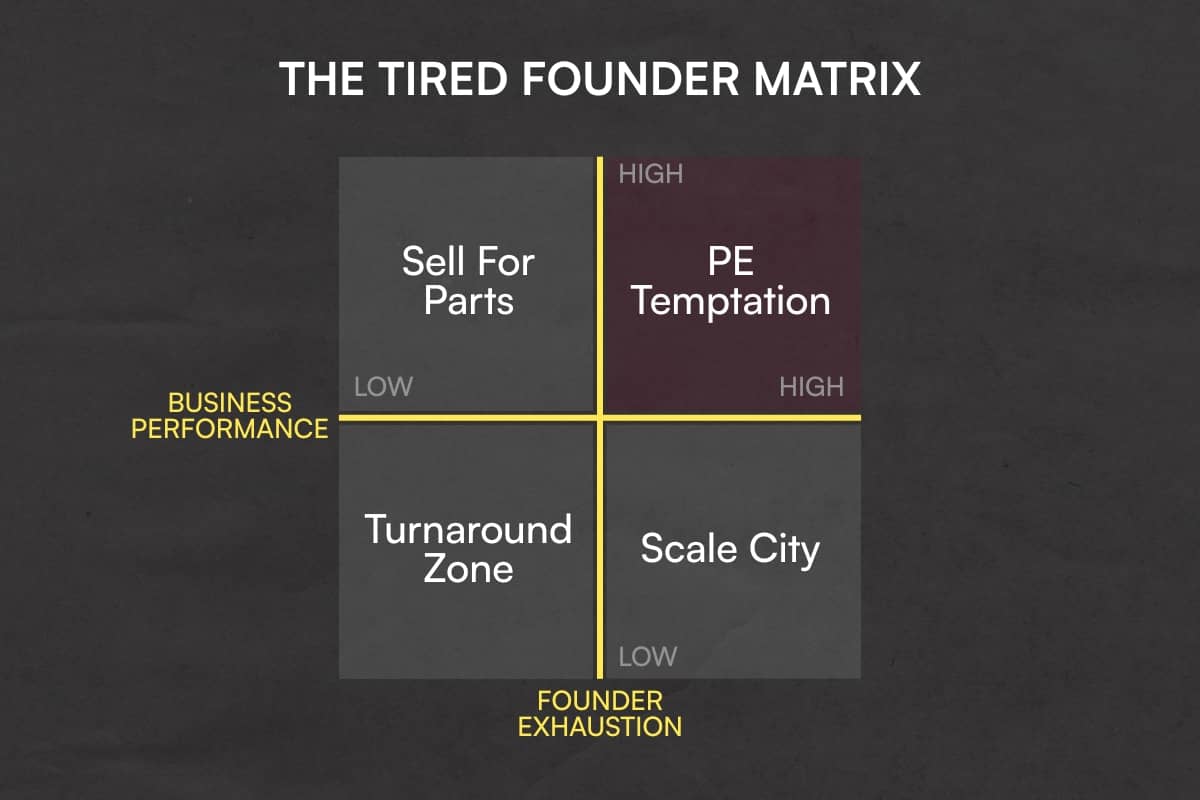
There are exceptions. But most often at the point of a PE deal, the seller is not chasing scale.
They are exiting simply because they do not have complete confidence in the next chapter. They want a step back from the intensity and uncertainty that built the narrative the buyer just purchased.
It’s not dishonesty. Just human survival.
The True Cost of Private Equity
Wrapped up in that PE dream are a few myths:
- PE is “easier” than debt.
- PE will let you avoid a banking process.
- PE means choosing partnership over burden.
But take a quick look at this chart from MSCI:

There’s a lot you can take away from that data.
For our purposes today, it means:
- PE usually means debt.
- In recent years, it means tight debt.
- That debt shifts the operating reality.
- And it changes how founders feel about the business, which they still have to run.
The data busts the PE dream into a million pieces.
The reality creates 3 major unintended consequences for founders:
1. The “Trap” You Agree To
When that deal closes, the business is no longer the same business.
It is now a vehicle with mandatory payments that do not care about seasonality, supply chains, recessions, customer behavior, or your feelings.
And you will have a lot of feelings.
First you see the big check.
Then you sign off on the capital structure. You understand it on paper.
But the moment the business stumbles, logic dissolves. Emotion takes over.
You feel trapped.
And forget you’re the one who asked for it.
2. The Ownership Psychology Shift
Most people tiptoe around this.
Let me be direct:
The seller just got a windfall. It’s psychological house money, so rolling equity is easy. Why not reinvest to appear aligned?
But the reality is: they don’t feel the same ownership they did when every dollar was truly theirs. It now feels like upside, not responsibility.
This matters.
As stress rises and debt pressure grows, the seller begins to mentally disconnect.
They start telling themselves they didn’t put the business in this position. Yes, they signed off on the structure – but real life sure feels different than paper.
And the narrative becomes:
“The debt is killing the business.”
3. Culture Changes Overnight
Now let me take you to the company six months after closing:
- The buyer is sending board agendas and financial reports.
- The founder is still in the CEO seat.
- The team is trying to adjust to a new chapter.
- And the debt is tightening everyone’s breathing room.
The culture is instantly changed.
The business cannot make decisions with the same freedom. There is less tolerance for experimentation. Forecasts feel constrained by a schedule of payments instead of opportunities. Every headwind feels heavier.
Debt doesn’t just change the balance sheet. It changes how the entire company breathes – and the founder feels it first.
A Note For Buyers
Here is where I want to speak to buyers as clearly as I speak to founders:
If you acquire a company and plan to keep the founder in the operator seat, understand what you are asking of them.
You are asking someone who has never run a debt-loaded business to suddenly think like someone who has. To carry pressures they have never experienced. To adjust their instincts, timing, style, culture, and leadership rhythm overnight.
And when anything goes wrong, both sides will quietly blame each other.
The seller says the buyers overburdened the business. The buyer says the operator isn’t adapting.
It happens far more often than anyone admits.
Why You Bring In an Expert Operator
Fighting this emotional structure is an uphill battle.
If you want a clean transition, help the founder exit quickly. Let them be what they are at this stage: a proud builder, not a future operator. Keeping them in the seat creates slow cultural decay and mounting tension, made worse by debt.
If you want the business to thrive, bring in someone who understands how to run a business with covenants, board meetings, pressure, oversight, and mandatory timelines.
Founders can be advisors, ambassadors, part of the story – but relying on them to operate a capital structure they’ve never run before is unfair to them and dangerous to the business.
A great buyer protects the culture and the value by installing the right operator early.
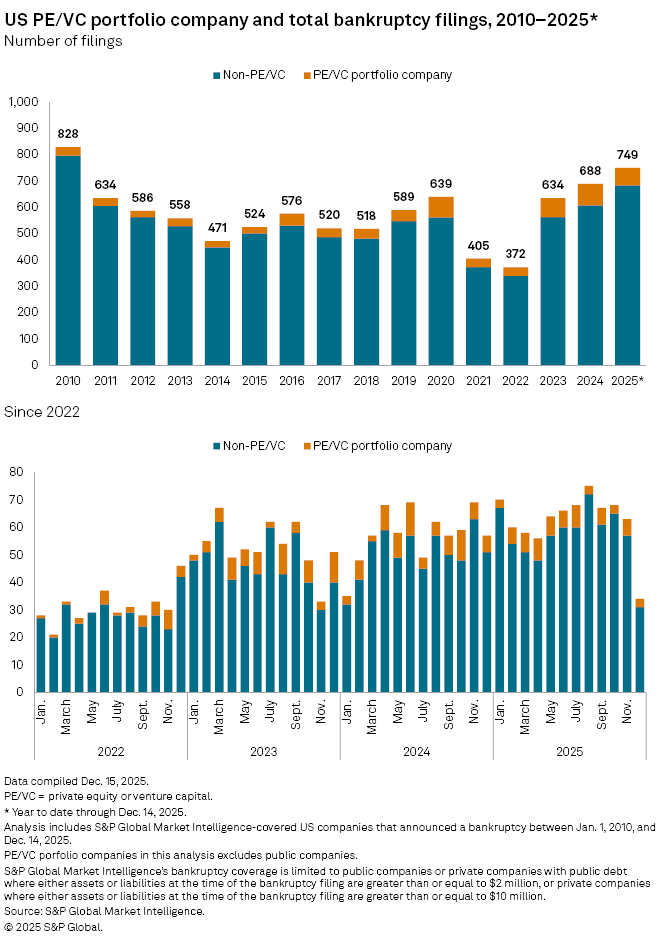
Buyers who don’t do this become one of these little orange statistics:
What A Founder Should Know Before Signing
If you are selling and walking away, this is not about you. You get your check and move on.
But if you’re staying, reinvesting, and/or keeping your identity tied to the business, then strongly consider these options:
- If you want capital without ceding your instincts or culture, sell pure equity.
- If you want debt, go get your own debt.
- If you want partnership, be intentional about the kind of partner.
Do not choose private equity because it feels easier.
“Easy” decisions are expensive.
And if you think your private equity firm will carry the operational pressure, I promise you they will not. That pressure belongs to the operator.
The Final Reality No One Likes Saying Out Loud
In many deals, both the buyer and the seller end up suffering.
The founder gets frustrated. The buyer gets impatient. The team gets confused. The value erodes – not because the business was weak, but because the alignment was.
Entrepreneurs chase the dream (easy money, fast growth) without seeing the truth: capital only works when the operating and emotional structures align. When they don’t, both sides feel the pressure and the business pays the price.
Here are 3 rules:
Understand the emotional math before you sign.
Understand the cultural impact before you celebrate.
Understand the operator reality before you believe the headline.
Keep those rules and you’ll make decisions that strengthen your future rather than selling a chapter you never intended to give away.
PS: I'm inviting 20 founders to Montana in Q1 to build their 2026 sight picture, and I'm sharing the exact operating system behind 17 companies and 9 exits. If you want one of the remaining seats, apply below.
Next steps
Action is the Advantage
If you’re like me, your to-do list is long. So I pulled out the highest-leverage actions from this week’s newsletter.
If PE has felt on the table for your business, do this:
✓ Ask why. What’s the underlying motive?
✓ Model the debt service a PE deal would add.
✓ Discuss that model with your leadership team.
✓ Reply with why you’re considering PE. I’ll help you pressure test it.
Vic Keller
17x founder. 9 exits. 3 to Berkshire. Subscribe to get the advantage I wish I had when I started.