the epic advantage
with vic keller
How I built a 9-figure business after causing 1,600 flat tires
3 min read
Hey Reader, I wrote today’s message for anyone standing on the verge of a business they think could be huge. So you can learn this lesson: Even a colossal failure doesn’t mean you’re on the wrong track.
Worth Saving
Quote of the Week
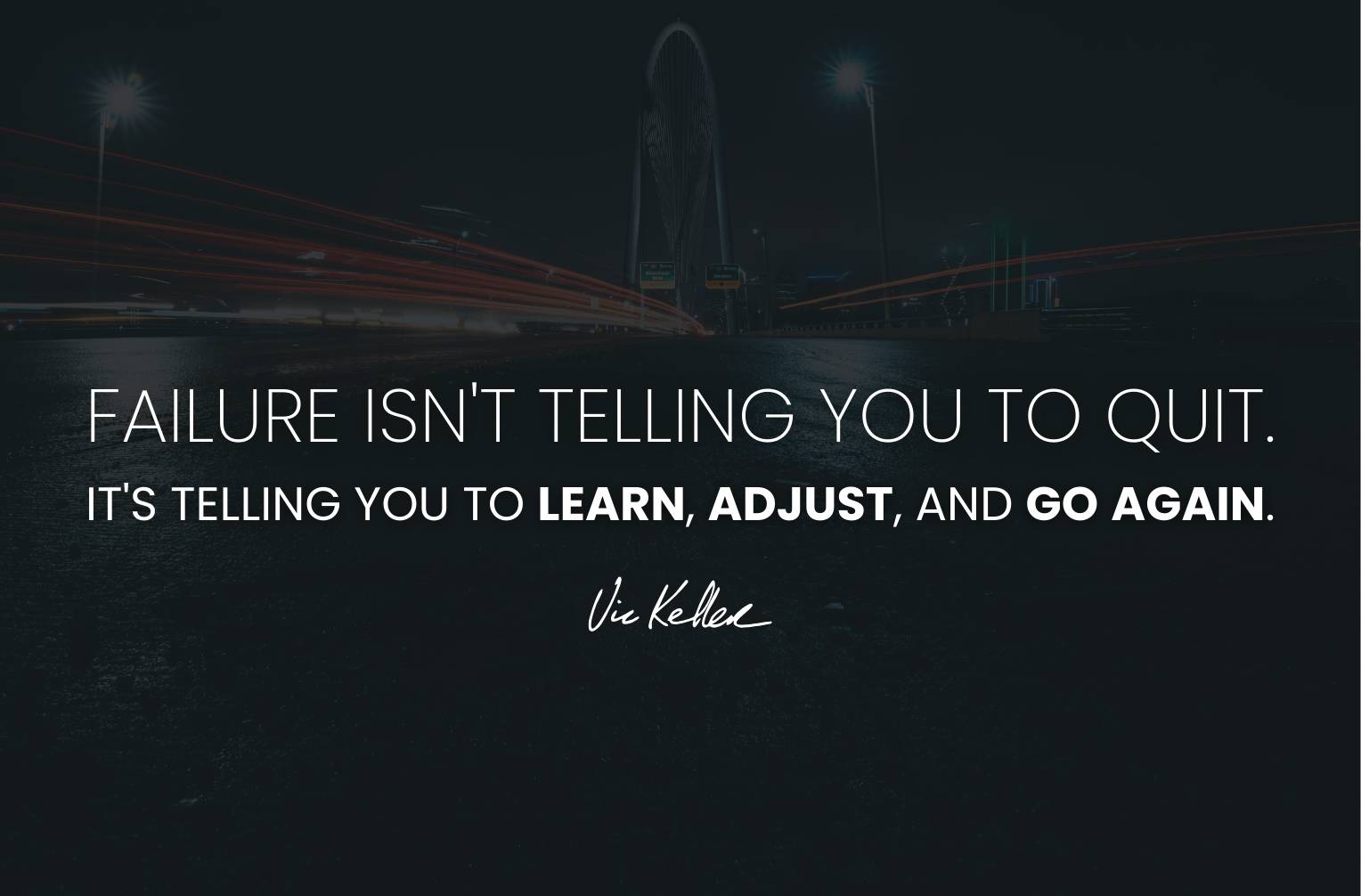
You should never take failure as a sign to give up. Just a sign to pivot and try again.
Audio Advantage
This Week's Insight





How I Built a 9-Figure Business After Causing 1,600 Flat Tires
I was 17 years old, a junior in high school, and for some reason I couldn’t stop asking questions.
Not the kind teachers wanted – those bored me.
I wanted to know how people made money, how things got sold, how companies got built from scratch.
One night I was over at my girlfriend’s house and her dad was talking about a business trip he was taking to Houston. He was the CEO of a guacamole company, and that weekend he was heading to something called the National Restaurant Association Show.
I had no idea what that was, but it sounded important. He said it was where the food industry’s biggest players met up – product launches, partnership deals, big buyers walking booth to booth, money moving behind the scenes.
I couldn’t help myself. I asked him a dozen questions. What kinds of people go? Do they sell stuff right there? Can anybody go, or do you have to be in the industry?
He answered politely at first, probably wondering why a 17-year-old kid in a high school football t-shirt wanted to know how guacamole distribution worked.
But the more I asked, the more I saw it in my head: rows of people pitching, making deals, shaking hands.
The Moment Business Became REAL
He didn’t invite me to that trade show.
But I figured out how to register on my own. I printed out a badge, put on the nicest clothes I had, and drove myself to Houston.
Walking into that convention center was like walking into another universe.
Thousands of people packed into the space. Booths stretching down every aisle. Stainless steel kitchen equipment, frozen snacks, packaging prototypes, sauces, seasoning lines, paper cups, grease traps…
You name it, it was there.
Every few steps, you’d see someone pitching a buyer or shaking hands on a deal.
That weekend changed me. It made the world feel wide open. It taught me that business wasn’t some mysterious thing reserved for guys in corner offices. It was happening right there, between two people with a product and a plan.
On the drive home, I made myself a promise:
Every year, I would go to a trade show in an industry I didn’t understand. If I kept showing up, something good would happen.
That promise led me, a few years later, to Taipei, Taiwan.
The Piece of Plastic That Started It All
I’d heard about the International Auto Parts & Accessories Show, one of the largest automotive aftermarket expos in Asia.
I had no business being there. I wasn’t in the car business. But that was the point.
I found a $400 ticket on EVA Airlines. At the time, EVA wasn’t flying plush commercial planes like the ones you see now. This was a cargo flight. Boxes were loaded front to back, and they had a few passenger seats bolted to the floor in the back of the plane, sandwiched between crates of goods and metal frames. No reclining. No food service. And if I’m being honest, probably not bed-bug free. But I was twenty-something and chasing ideas. I didn’t care.
When I got to the trade show, it was everything I’d hoped – and nothing like the polished events back in the States. The convention center was massive and tiered like a wedding cake.
The top floor was showroom-level: flashy signage, corporate booths, executive types in matching polos giving PowerPoint demos.
The second floor was where the mid-sized players hung out. Not flashy, but legit. Selling things like floor mats, window tint, chrome door handles, and third-party electronics.
But then there was the basement.
The basement was where desperation and brilliance met. Handwritten signs. Poor lighting. Half the vendors were hunched over homemade prototypes. The air smelled like glue and stale noodles.
That’s where I headed.
And that’s where I saw it: a plastic tire valve cap that turned colors based on tire pressure. Green meant everything was fine. Yellow meant it was low. Red meant danger. It didn’t require a battery or a sensor – just a spring-loaded pressure indicator.
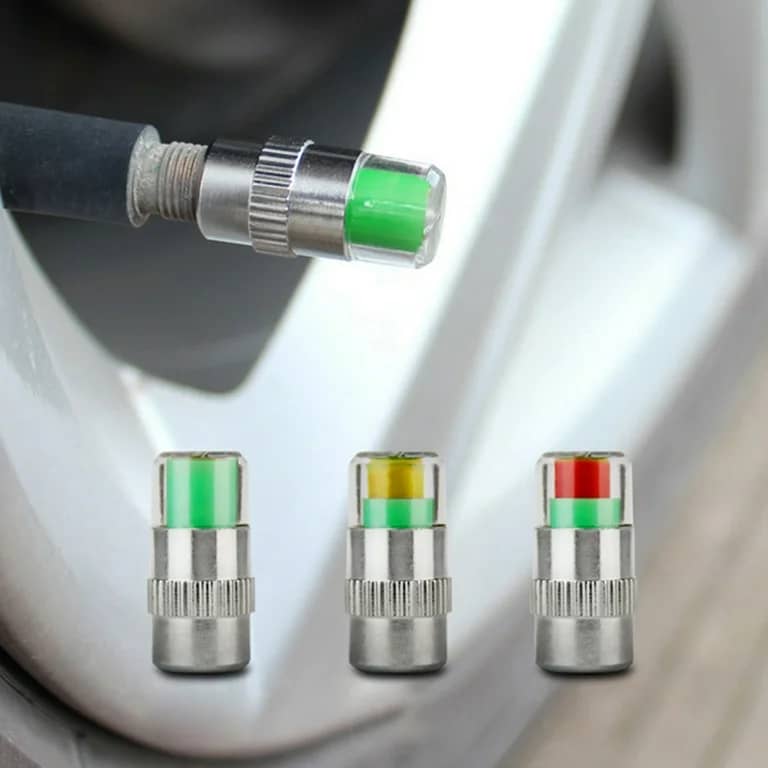
It was clever. Simple. Cheap.
And when I saw it, something clicked.
I didn’t buy anything that day. But I tucked away the idea.
The Day Everything Went Flat
Fast forward a year, and suddenly Ford Explorers were flipping over on American highways. The headlines were everywhere. Firestone tires were failing. Families were dying. And the cause was consistently the same: under-inflated tires, overheating, and blowing out at high speeds.
The government stepped in. They announced that all vehicles would soon be required to have Tire Pressure Monitoring Systems, or TPMS.
Manufacturers said it would take two years.
It took seven.
I immediately thought back to that valve cap. This was it. The world had just woken up to a problem I had a solution for.
I tracked down the supplier in Taiwan, made a deal, and started importing the caps for $1 a set.
But instead of selling them through parts stores, I had a different plan.
I wanted to sell directly to car dealerships. I pitched it as a safety value-add: install these before delivery, charge customers $200, and give them peace of mind for a few bucks in cost.
One dealership in Phoenix took me up on it. They ordered 400 vehicle sets, 1,600 caps in total.
I was pumped. I loaded my truck and drove the shipment down myself.
When I showed up, I met with the general manager named Tom. I shook his hand, proud and ready to deliver the goods.
Tom looked me in the eye and said, “You’re installing them.”
I thought he was joking.
He wasn’t.
It was July in Phoenix. Over 110 degrees. I was on my knees, on scorching pavement, crawling from tire to tire. I blistered my fingertips screwing on hot plastic. The sun roasted the blacktop like a frying pan. Half the tires were already low, so I had to go buy portable air tanks from Home Depot and fill them one by one.
I didn’t complain. I was building something.
I finished the job hours later, burned, exhausted, dehydrated – but proud.
The next morning, my phone rang.
“Vic,” Tom said, his voice already raised, “we’ve got a big f***ing problem.”
“What do you mean?”
He yelled, “Every single tire is flat. I’ve got 400 cars sitting on rims. I’m gonna f***ing kill you.”
My stomach dropped. I couldn’t even speak.
The heat had melted the inner seals of the caps. They hadn’t been designed for real-world heat like Phoenix in July. They slowly let out air all night. One by one, every tire I’d touched had gone flat.
I hung up and stared at the wall, drenched in shame. All I had wanted was to prove I could build something, and I’d blown it. I had taken my shot, and now I was being cussed out by a guy who had trusted me.
But here’s the thing: I didn’t disappear.
I got back on a plane. Returned to Taiwan. And I redesigned the entire product. We made it stronger. Better materials. Precision fit. Real durability.
Six weeks later, I had something that worked.
But that experience also made me rethink the whole business.
The Pivot That Changed Everything
See, the valve cap was never going to be enough. It was a good product, but the real value was in the peace of mind it gave people. That’s what dealerships could sell. So I created a new model.
I called it TireXam. I sold the cap for $20 per set. But I bundled it with a tire and wheel protection warranty that dealerships could offer customers for $599. If a tire was damaged or a wheel cracked, we covered it.
The dealers loved it. Customers loved it. And the program took off.
Within a few years, we were working with thousands of dealerships, protecting millions of tires, and the business had grown into the 9-figure range.
Then TPMS became standard.
But I didn’t panic. I pivoted.
I had been studying the science of tire pressure and discovered that nitrogen was a better inflation gas than oxygen. Its larger molecules made it leak slower, which meant better tire performance and fewer blowouts.
So I rebranded the business as TireAssure, and I offered dealerships a deal:
“We’ll give you a nitrogen inflation machine at no cost if you commit to selling our protection plan.”
They did. The program gave customers a reason to come back every few months for free top-offs—which turned into oil changes, alignments, and new service revenue.
The cap was gone. But the business was stronger than ever.
Years later, I walked through a dealership and saw a kid point at a tire and say, “Dad, they’re all green! That means we’re safe, right?”
That moment hit me harder than any revenue milestone ever could.
Because that’s what we’re really selling.
Not the cap. Not the machine. Not the policy.
We’re selling peace of mind.
And it all started with a $1 idea, a blistering mistake, and a moment where I could have quit – but didn’t.
If You’re In the Hard Part
Maybe this is the whole point.
Every entrepreneur I know has their moment where they’re standing in the heat, sweating through their shirt, watching everything they thought would work fall flat – literally or metaphorically.
Some quit. Some disappear.
But the ones who build something that lasts?
They stick with it. They ask better questions. They get on the next flight. They show up again the next day.
I didn’t have capital. I didn’t have connections. I didn’t even have a working product for a while.
But I had curiosity, grit, and enough belief to keep going one step past the failure.
That’s where things started to work.
So if you’re in the middle of the hard part, if you’re facing your own version of 1,600 flat tires:
Don’t panic.
You might just be standing on the edge of the best thing you’ll ever build.
PS: A few seats left for Montana. 2 days. My home. The kind of room that changes how you attack 2026. Click Here to Apply
Next steps
Action is the Advantage
If you’re like me, your to-do list is long. So I pulled out the highest-leverage actions from this week’s newsletter.
✓ Stress-test the idea you’ve been sitting on. Failure may be just what you need.
✓ Rewrite your offer around the anxiety it removes.
✓ Reply with your thoughts, and I’ll keep you accountable.
Vic Keller
17x founder. 9 exits. 3 to Berkshire. Subscribe to get the advantage I wish I had when I started.